





























Can't find the right product? Request a custom solution here !
Solid carbide spiral drill
Solid carbide spiral drills are universal precision tools designed to reliably produce dimensionally accurate holes in a wide range of metallic materials. Their spiral flute geometry facilitates controlled chip removal while stabilizing the drilling process. Thanks to their combination of high hardness, dimensional stability and thermal resistance, twist drills ensure smooth cutting conditions, clean hole geometries and consistent surface quality, even at higher speeds and when machining demanding materials.
Applications
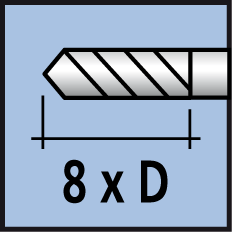
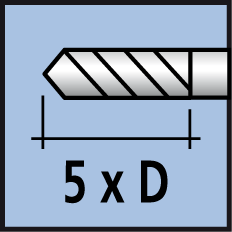
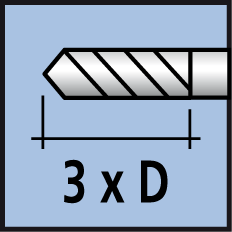
Spiral drills are used for through holes, blind holes, pilot holes and threaded holes. They are suitable for steel, stainless steel, cast iron, aluminum and non-ferrous metals, delivering consistent results provided the geometry and helix angle are selected appropriately. In CNC environments, they are used in machining centers, turning-milling centers and multi-spindle systems, offering reliable process reliability in automated operations. Variants in 3xD, 5xD or 12xD designs expand the range of applications to include deeper holes, where chip removal plays a particularly important role.
Technical Specifications
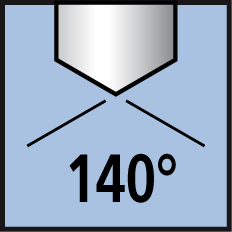
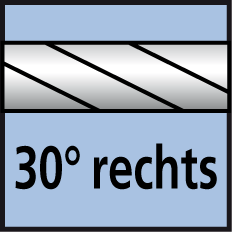
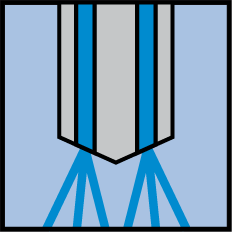
The cutting geometry of a spiral drill determines its penetration behavior and chip formation. The point angle and rake face influence the axial force required, while the helix angle determines how chips are formed and removed. High helix angles are advantageous for softer materials or those that produce long chips, while lower helix angles improve stability when machining tougher materials. For deeper drilling depths, internal coolant channels direct the coolant directly to the cutting zone, supporting both heat dissipation and chip removal. Coatings increase wear resistance and ensure consistent machining results.
Selection criteria
The selection depends on the material, drilling depth, machine rigidity and desired fit. Deeper holes require stable chip clearance and, if necessary, internal cooling, while standard geometries are sufficient for shallower holes. Concentricity, tool clamping and an optimized coolant flow significantly influence dimensional accuracy, surface quality and tool life.
What is a spiral drill used for?
For through holes, blind holes, pilot holes and threaded cores in various metallic materials.
What role does the twist angle play?
It determines the chip formation and the chip evacuation process and should be tailored to the material and cutting strategy.
When is interior cooling recommended?
For deeper drilling depths or poor chip evacuation, to reliably remove heat and chips from the drill hole.