










































Can't find the right product? Request a custom solution here !
Solid carbide end mill
Solid carbide end mills are precision cutting tools designed for the accurate machining of contours, surfaces and 3D geometries. Thanks to their high hardness, dimensional stability and thermal resistance, they deliver smooth cutting conditions, repeatable results and high-quality surfaces. They are used in CNC machining centers and turning-milling centers and cover a wide range of applications, from high-speed roughing to fine finishing. The defined cutting edge geometry, precise grinding quality and depending on the version coatings ensure process stability and tool life across various material groups.
Applications
Solid carbide end mills are used for machining shoulders, grooves, pockets, flat surfaces, profiles and free-form shapes. They are suitable for steel, stainless steel, cast iron, aluminum and numerous alloys. In tool and mold making, mechanical engineering, precision mechanics and series production, they ensure reproducible results, whether for high material removal rates in roughing or for demanding finishing operations with tight tolerances and defined surface quality.
Technical Specifications
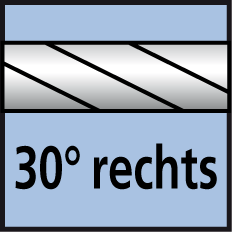
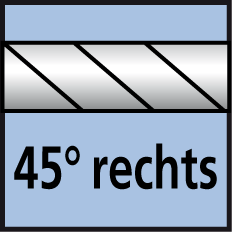
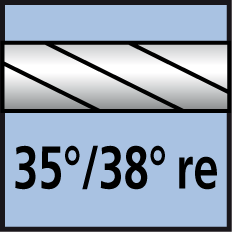
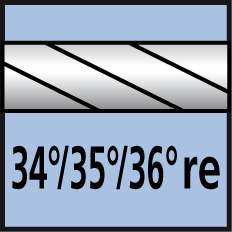
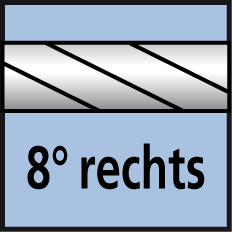
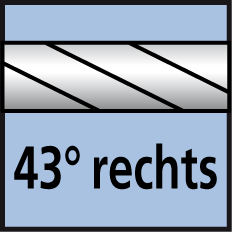
The number of cutting edges, helix angle, core geometry and chip evacuation design determine smoothness of cut, stability and chip removal. Precision-ground cutting edges reduce vibrations and promote clean edges and contours. Coatings increase hot hardness and reduce friction; internal cooling (in suitable designs) improves heat dissipation and chip evacuation during deep cuts. The solid carbide structure remains dimensionally stable even under load, ensuring dimensional accuracy.
Selection criteria
The selection of a suitable milling tool depends on the machining strategy, the material group, the required surface quality, the part geometry, as well as the machine and clamping technology. Within the milling cutter family, the subcategories perform different tasks:
Solid carbide ball nose end mill
For creating edge radii, fillet radii and 3D transition geometries. The radius reduces notch stress and creates smooth transitions.Solid carbide end mill
Universal tools for shoulders, pockets and contours. The number of cutting edges, helix angle and face geometry determine feed stability, smooth cutting action and surface quality.Solid carbide end mill with interior coolant supply
For deep cavities or tough materials. The twisted internal cooling channel improves heat dissipation and directs the coolant directly to the cutting edge.Solid carbide router (Upcut)
For materials such as aluminum, non-ferrous metals, or plastics, where clean chip removal and smooth edges are important.Solid carbide roughing end mill
For high material removal rates and rough machining. Interrupted cutting edges and special profiles reduce vibrations.Solid carbide deburring and chamfering mill
For clean edge transitions and burr-free results without additional finishing.Solid carbide corner-rounding concave cutter
For concave radii and shaping profile machining in a single operation.Solid carbide toric end mill
For stable milling paths in pockets and free-form surfaces. The corner radius reduces stress on the cutting edge and improves surface quality.Solid carbide ball nose end mill
For 3D contours and free-form surfaces. The combination of a rounded shape and optimized geometry ensures very smooth cutting conditions.Solid carbide engraving bit
For fine engravings, markings and delicate patterns. The sharply ground cutting edge allows for precise lines.
Other factors include tool clamping, concentricity, the number of cutting edges, helix angle and machining strategy. These factors significantly influence tool life, process reliability and the achievable surface quality.
What are solid carbide end mills used for?
For shoulders, grooves, pockets, flat surfaces, as well as profile and free-form machining in metallic materials.
What factors determine the choice of tools?
Material, number of cutting edges, helix angle, core geometry, machine rigidity and desired surface finish.
When are coatings or internal cooling systems recommended?
For thermally demanding processes, abrasive materials, or deep cuts, to enhance process reliability and tool life.